





As one of the world’s largest democracies, India faces a formidable task in securing its digital ecosystem, and it is reported to be the third most cyber-attacked nation. Enterprises across government, the corporate world and the public sector are strengthening their defences, but the larger challenge is to build resilience in the true sense.
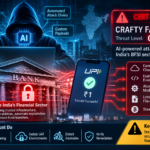
National leaders are especially worried about breaches in critical infrastructure sectors, notably banking, where an attack can disrupt the entire financial ecosystem. For most of them, the top agenda is to establish resilience and trust, and to drive the innovation needed to counter threat actors in the AI era.
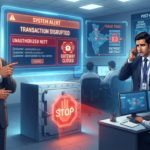
The recent incident at State Bank of India, the country’s largest public sector bank, in which some customers’ data was reportedly exposed on the dark web, underlines the urgency. It calls for a strong national agenda that helps enterprises build resilience, trust and innovation into their recovery and risk-mitigation strategies.
At c0c0n 2026 in Kochi, top leaders stressed the need for resilience at scale: security and operations that can absorb shocks, resist failures and recover quickly, even as organizations grow into large, complex, enterprise-wide environments. That, they argued, must shape the national agenda too.
Resilience and Trust
Leaders see resilience and trust as the two core imperatives for InfoSec leaders, both to recover from a breach and to build stronger defences against evolving threats.
 T V Ravichandran, Deputy National Security Adviser, said in his keynote on “Cybersecurity in the Age of AI: From Digital Transformation to Sovereign Capability” that cybersecurity has moved from an IT issue to a question of national resilience, given the vast digital platforms the country has built.
“The industrialization of cybercrime is meeting the industrialization of AI, and therefore a strategic shift has already taken place. Today, the most important target of a cyberattack is human trust, as 95% of cybersecurity issues and data breaches are traceable, directly or indirectly, to human error.”
He added that India must decide what data to train on and build indigenous security models that can detect fraud patterns, languages, infrastructure and threat actors specific to the country.
 Ravada A. Chandrasekhar, Director General of Police and State Police Chief of Kerala, echoed the sentiment: progress in containing cybercrime must be matched by security, innovation must be backed by responsibility, and the digital world must stay safe, resilient and inclusive for everyone.
 C S Setty, Chairman of State Bank of India, said resilience is not only about responding quickly but also about staying ahead of threats. AI, he noted, is becoming both one of the most powerful defensive tools and one of the most significant emerging sources of cyber risk.
“The emergence of increasingly capable frontier AI models therefore requires us to move beyond conventional cybersecurity preparedness towards continuous, intelligence-led and system-wide resilience.”
 Sanjay Bahl, Director General of CERT-In, called for resilient defences across organizations, supply chains and the wider ecosystem. This means adaptive, continuous protection of data, proactive threat management, better decision-making in a crisis, and community-wide collaboration against malicious actors. Organizations that adopt continuous resilience models that evolve with technology, he said, will make cyber resilience the backbone of trust in the digital age.
 Ashish Chauhan, CEO of National Stock Exchange of India Ltd, called trust the core concern for cybersecurity professionals.
“Modern life is about trust.”
Societies are becoming ever more trust-based, he said, and once that trust is diluted, attackers can manipulate people’s minds, behaviour and wealth, raising anxiety across society.
Strategic Defence Techniques
Building strategic defences and innovating in how they are applied is another priority for the nation and its enterprises.
Setty pointed to CyRIS, a cybersecurity centre of excellence set up to strengthen cyber defence and threat intelligence across the financial sector. Most banks, he said, do not yet use frontier technologies against AI-related threats, so SBI is focusing on emerging AI risks at both bank and industry levels, and working with other players to create a sandbox for testing AI tools.
Ravichandran said Q-Day may not be far off and urged preparation: “We need to build QBoMs in every organization and in every sector to have cryptographic inventories, crypto-agility, post-quantum pilots and migration planning, and above all, Indian cryptographic research and products.”
Bahl advocated a risk-based approach to trusted AI systems and secure AI value chains, with open discussion of AI-related cyber risks and how to mitigate them.
Chauhan noted that hackers, visible on the dark net, increasingly work alone or in coalitions. Security professionals, he said, must likewise combine forces.
The Way Forward
What should the path to resilience and trust as a national agenda look like?
Chauhan said trust must be built through cybersecurity as much as through market governance, corporate governance and the fair treatment of customers by brokers.
Strategic autonomy. For Ravichandran, it comes down to creating intellectual property, high-value employment, deep-technology companies and export capability.
“The new national question is not about firewalls, SOCs, antivirus and compliance. It is about building cybersecurity resilience, which is tied to intelligence, talent, technology products and sovereign capability.”
Setty said the banking sector has created the Indian Digital Payment Intelligence Corporation, a consortium of financial institutions that acts as the central fraud-intelligence body for digital payments. It identifies mule accounts and shares the information across banks in real time to prevent fraud.
Chandrasekhar said Kerala Police is building a future-ready law enforcement ecosystem, with specialized training on the dark web, anonymized networks, the cryptocurrency ecosystem and the complexities of investigating transactional cybercrime.