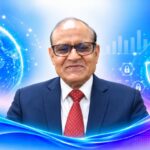





India cannot wait for quantum computers to fully arrive before building quantum-safe defenses, says Dr. Rajkumar Upadhyay, CEO of C-DOT and Chairman of the India Quantum Mission Task Force. The reason is “harvest now, decrypt later”: attackers can steal encrypted data today and unlock it once quantum computing matures.
“If you hold sensitive data, you need to work fast,” Upadhyay said. Today’s classical encryption cannot be broken, he noted, but that offers no protection for data that will still be sensitive years from now.
A two-phase migration roadmap
The Quantum Mission Task Force has set out a phased framework that balances urgency with what organisations can realistically execute:
- Priority migration (2029): Critical infrastructure, including defense networks, banking systems, power grids, strategic communications and diplomatic records, must move to quantum-safe encryption.
- Broad migration (2033): All remaining enterprise and public-sector organisations complete their transition.
In an interview with CISO NOW, Upadhyay described post-quantum cryptography (PQC) and quantum key distribution (QKD) as two layers of the same defense.
Post-quantum cryptography (PQC) is software-based, built on hard mathematical problems, and suited to large-scale enterprise deployment and standard network transport. C-DOT’s examples include Q-Setu and Amogh, a layer-1 optical encryptor.
Quantum key distribution (QKD) relies on the laws of physics rather than mathematical difficulty, offering information-theoretic security. It fits high-security environments, defense installations and high-capacity data links. C-DOT’s examples include Akshay QKD and Measurement-Device-Independent QKD.
Organisations do not need to overhaul legacy infrastructure overnight, Upadhyay stressed. Adapters can bridge older systems to quantum-compliant protocols. The biggest obstacle today is not technology but awareness and audit readiness: many organisations do not yet know where their cryptographic exposure lies.
Tying the effort to the Viksit Bharat vision, Upadhyay said quantum technology, AI and 6G are still open global fields. India, he argued, can move from consuming technology to supplying cost-efficient, tested and standards-compliant indigenous security solutions, a case for technological sovereignty as much as for security.
Dr. Rajkumar Upadhyay is CEO and Chairman of the Board at the Centre for Development of Telematics (C-DOT), the premier telecom R&D centre under the Ministry of Communications, Government of India, and Chairman of the India Quantum Mission Task Force.